After a successful hike of the Santa Cruz Trek, I set my sights on the Huayhuash Circuit. I knew that with my minimalist gear and light tarp, there were going to be some rough moments. The forecast called for 1-2 inches of rain everyday. The hike includes 10 passes and 30,000 feet of elevation gain. Almost all of the passes are over 15,000 feet, with one over 16,000 ft.
After a few days resting and preparing in Huaraz, I took the 5am bus to Chiquian. I asked around about the next bus to Llamac, but found out it was not until the evening. I walked to the edge of town and met a few local people that were also waiting for a ride. I had a nice chat with a women who warned me that I would be eaten by a mountain lion. Eventually a ride came along, and the three of us were all sitting the in the truckbed, bouncing down the idyllic dirt road.
For 30 soles (8usd) the person took me all the way to Pocpa, where I began my hike. I set off up the steep switchbacks climbing thousands of feet up the hillside. As I neared the top, visibility eroded and rain began to fall.

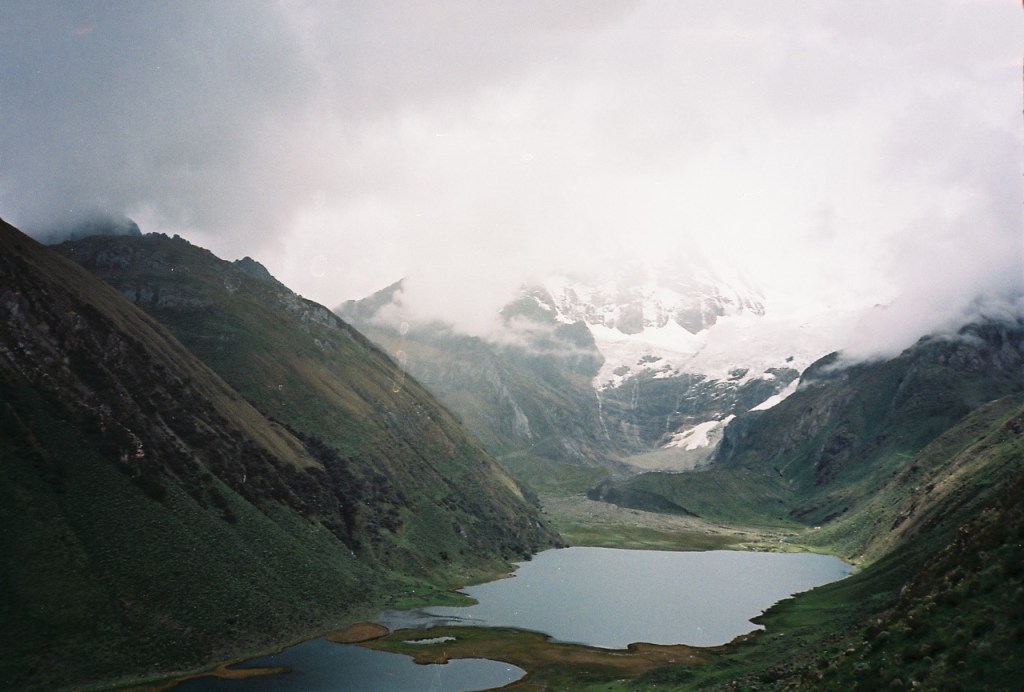
As I descended over the pass and out of the clouds a lush green landscape greeted me. I continued into the mountains through the storm. The rain began to fall harder and harder. As I passed Laguna Jahuacocha, the rain began to turn to snow. I continued up towards Paso Rondoy. Atop the pass, there was about an inch of fresh snow. I continued along in the frigid temperatures, getting colder and colder now that I was no longer climbing. Finally after descending a few thousand feet, I was getting too cold, so I setup camp on the hillside. It took me a few minutes to warm up, as I was totally drenched and freezing. I had some cold soaked food, and rested for the night.
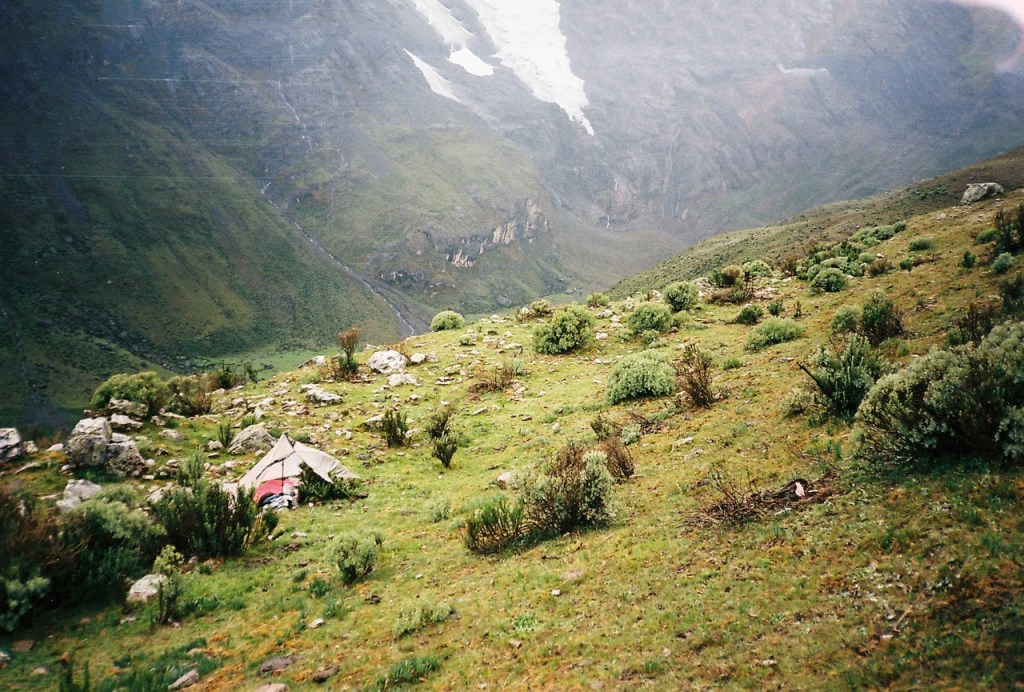
The next morning, I continued along the trail and met up with a dirt road for a few miles. I talked to a woman herding sheep for a bit, and then began climbing over the next pass. I was heartened by the drier weather this morning and was feeling optimistic about the trip. The views from the pass “Cacanapunta” were stunning in all directions. A dog met up with me and kept me company for the next day. Clouds began to build as I descended from the pass.


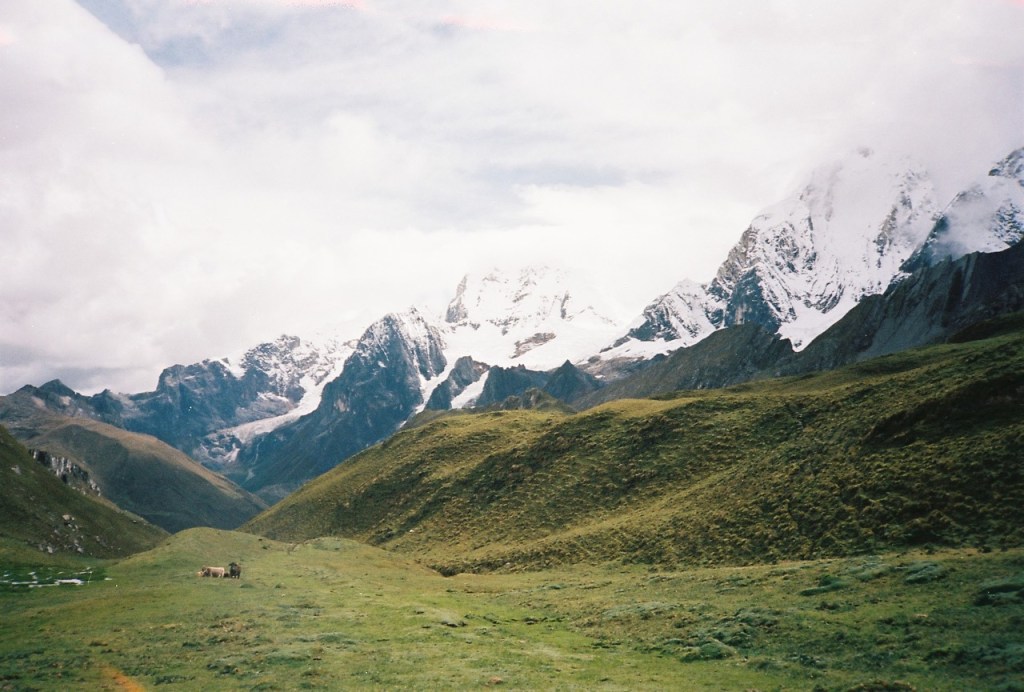
The clouds covered more and more of the mountains as the day went on, and eventually it started to rain. I had finished all of my high elevation passes for the day though, so the rain was just a minor annoyance. I setup camp at Laguna Carhuacocha, where I saw the only other “hikers” of the entire trip. The group consisted of three guys from Switzerland, they were doing a more standard week plus loop around the Huayhuash, complete with guides and pack stock. They graciously invited me over for dinner and seemes very suprised about my trip. “The whole loop in four days?”, they inquired. “No boots, no tent, no guides and no stove?” Clearly they thought I was crazy, but I thought the same thing of their trip. I couldn’t imagine doing this trip and being beholden to the schedule of a massive group, the feeling of adventure would be greatly diminished.
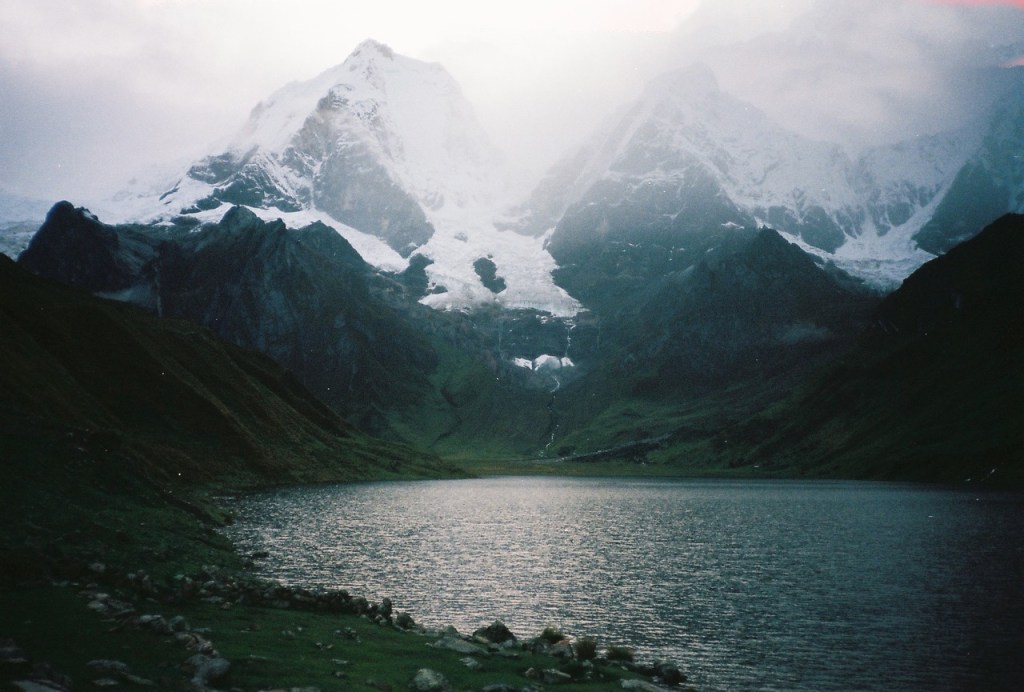
As the sun set that evening I got an incredible view of the 21,768′ Yerupaja, perhaps the highest mountain I will ever walk close to. While I walked around the whole mountain, this was perhaps the only clear view I would get.
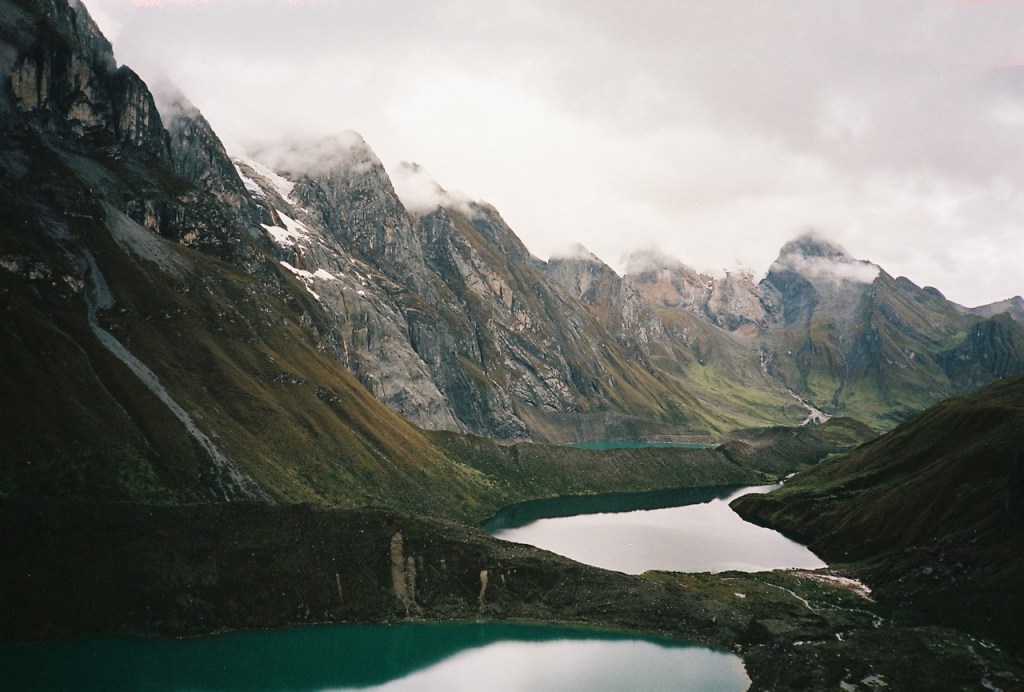
I got up early the next morning and quickly passed the guided group. I hiked up to Mirador Tres Lagunas, but clouds were already blocking the highest mountains. My canine friend turned around at some point in the morning when I jumped over a river. As per usual, the day started out dry, but rain began in the late morning. I paid my only two park fees of the trip. Some people report paying as many as 10 park fees, but as I hiked in the off season I only met two cobradores. I enjoyed sitting and talking with each of them for a while in spanish.


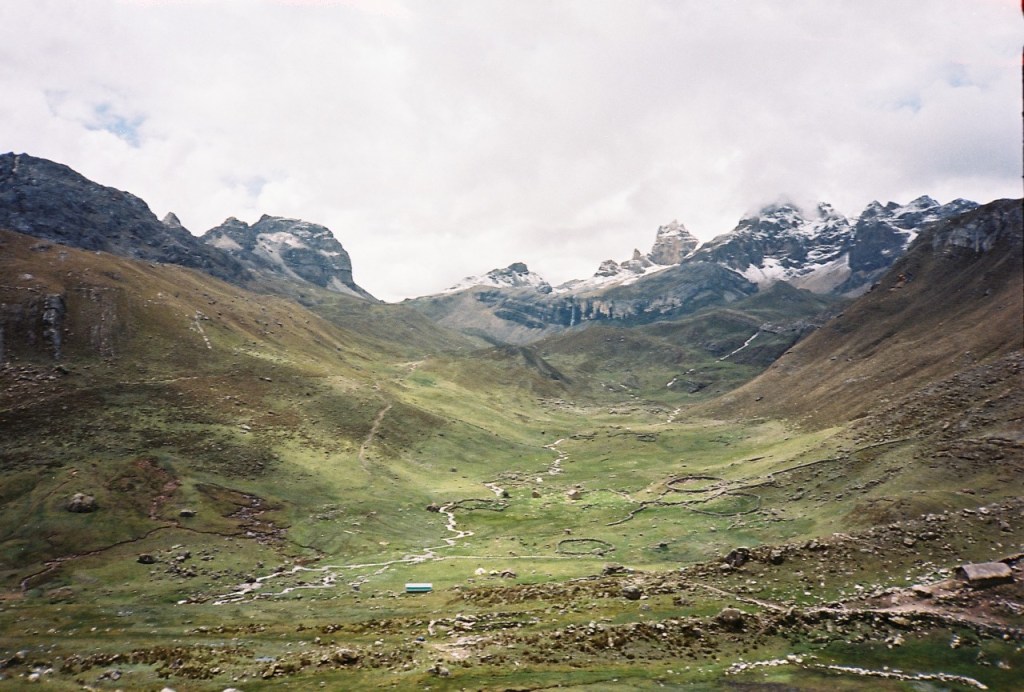

The rain grew thicker and thicker, until it reached a downpour. I was nearing some hot springs though, so I pushed on through the storm. As I approached the hot springs, a man came out of a hut and told me in Spanish that I could camp in the hydroelectric hut for the night. I dropped my stuff there, and walked half a mile or so to some hot springs. The hot springs warmed my frigid body, and I felt immense relief after two and a half days of cold. The two hydroelectric workers were very friendly, and let me boil some water on their stove. We had a wide ranging conversation from sports, to mountains to countries.
I left early the next morning, determined to get over the 16,500 foot pass before it started snowing. My lungs burned a little bit as I neared the top, but overall I had acclimated nicely from my previous week in northern Peru. Near the top there was about an inch or two of snow, but this quickly dissipated as I neared the top. I had aspirations of heading north over Paso San Antonio, but the snow up there scared me off. Instead I descended down to Huayllapa for the rest of the morning. By midday, it had started to pour, and I walked a very wet few hours to get to Huayllapa. I found a hostel there for around $5usd and stayed there for the night, sleeping soundly as the rain splattered all night on the metal roof.
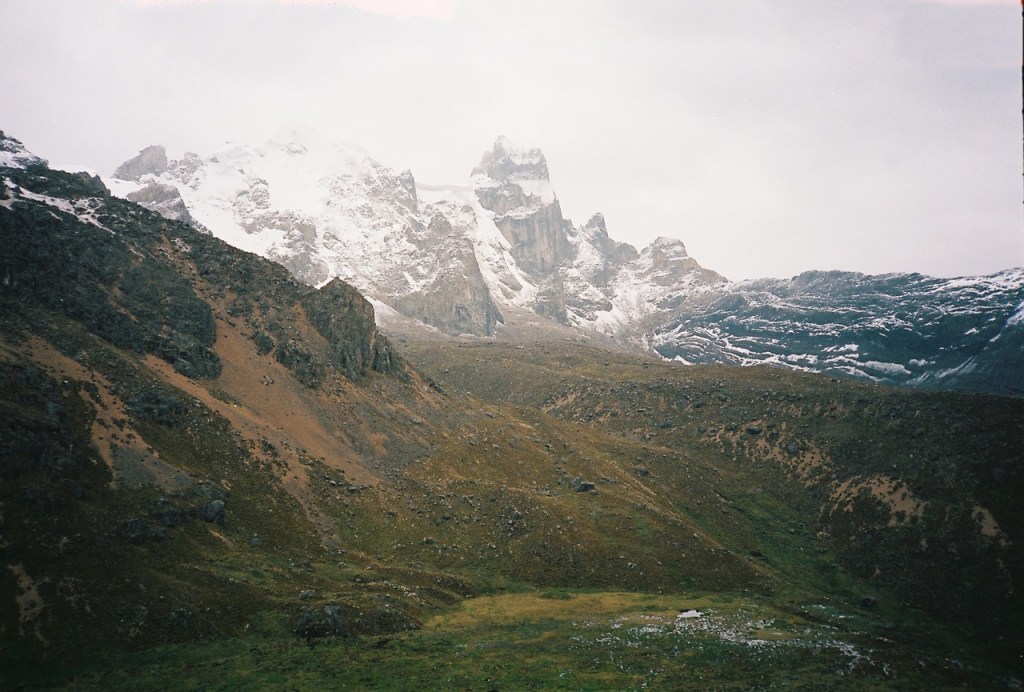
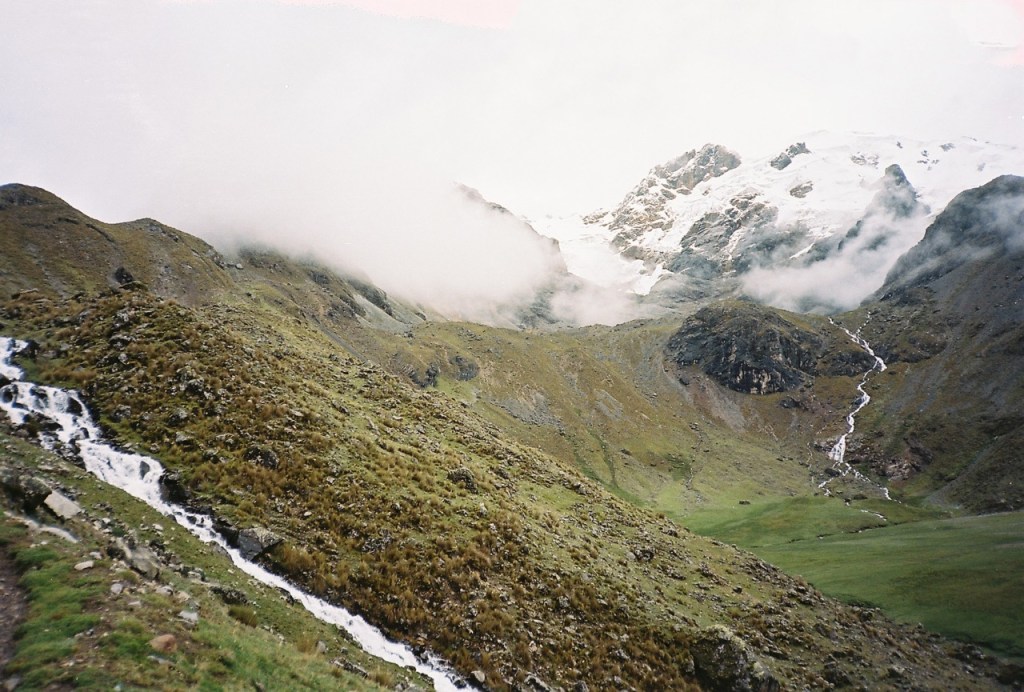
The next day, New Years 2024, I walked the final 24 miles to Llamac completing the loop. In typical fashion, the day started off dry, but the sky opened up by midday and rain poured down. I didn’t see a single person all day, hiker or shepherd. As luck would have it, I ran into the same dog that I had met on day two. He was a useful companion as he fended off some other dogs that bluff charged me, As I descended the final few miles, my whole body tensed up and I began to feel the effects of the 30,000 vert I had undertaken over the last four days. None of the people in Llamac believed me that I had completed the “10 day” hike in just over four. If there hadn’t been so much rain, I might have slowed down a bit, but I could have also gone faster and hiked until sunset every day. December and January are not the best times of year for views and dry weather out in the Huayhuash, but the rain and the solitude sure made for a great adventure. While the area is certainly on the tourist trail, it did not feel that way in the rainy season. I headed down to the thicker yet more polluted air of Lima filled with a real sense of accomplishment.

 Anthony Ottati