Categories
Uncategorized

SF Zoo to Palo Alto Skyline

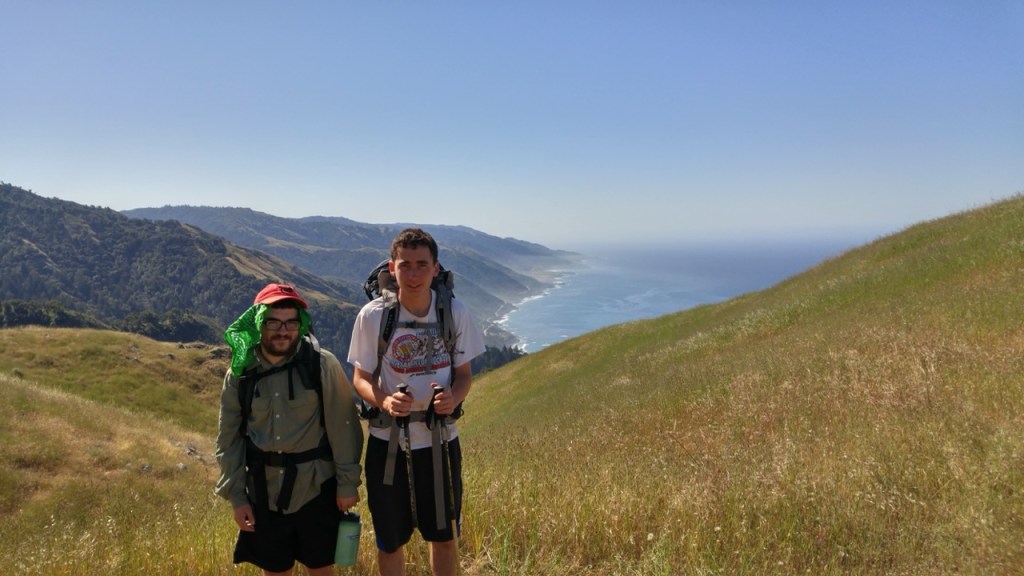
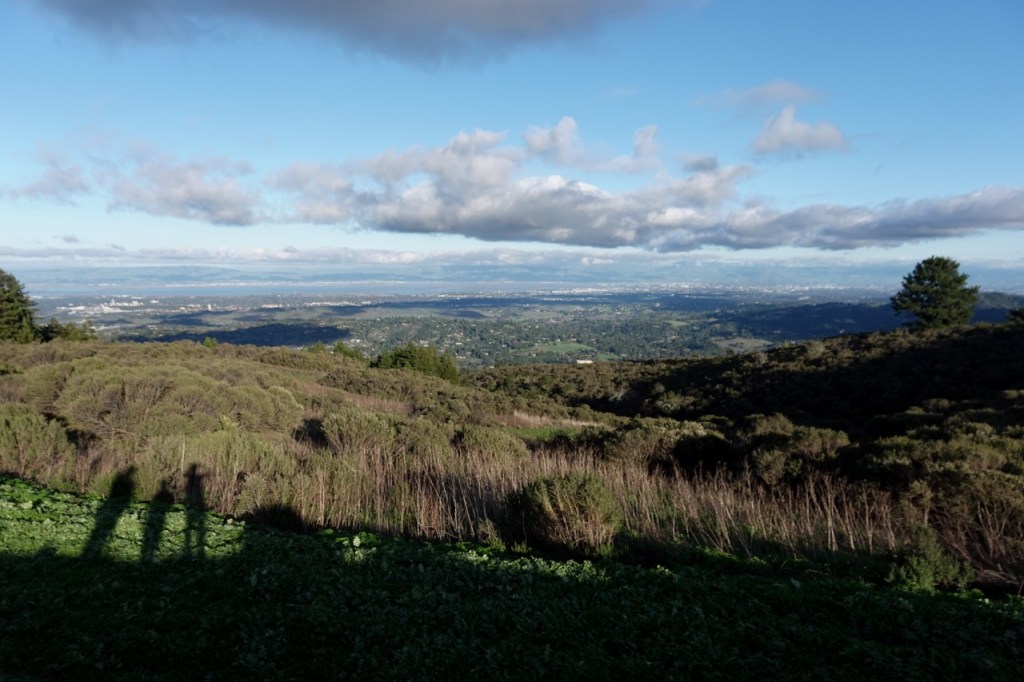
The Peninsula Section of the Ridge Trail had been near the top of my list for a long time. San Mateo County was a conspicuous gap on my California hiking map. Finally in December 2025, right after Christmas, I set out to hike this section.

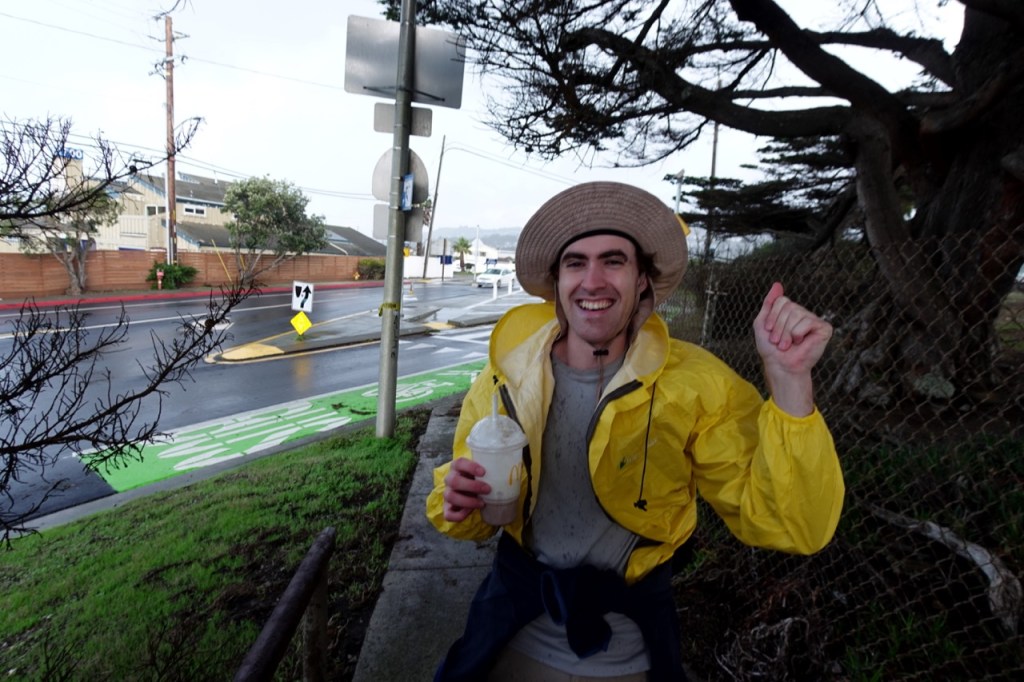
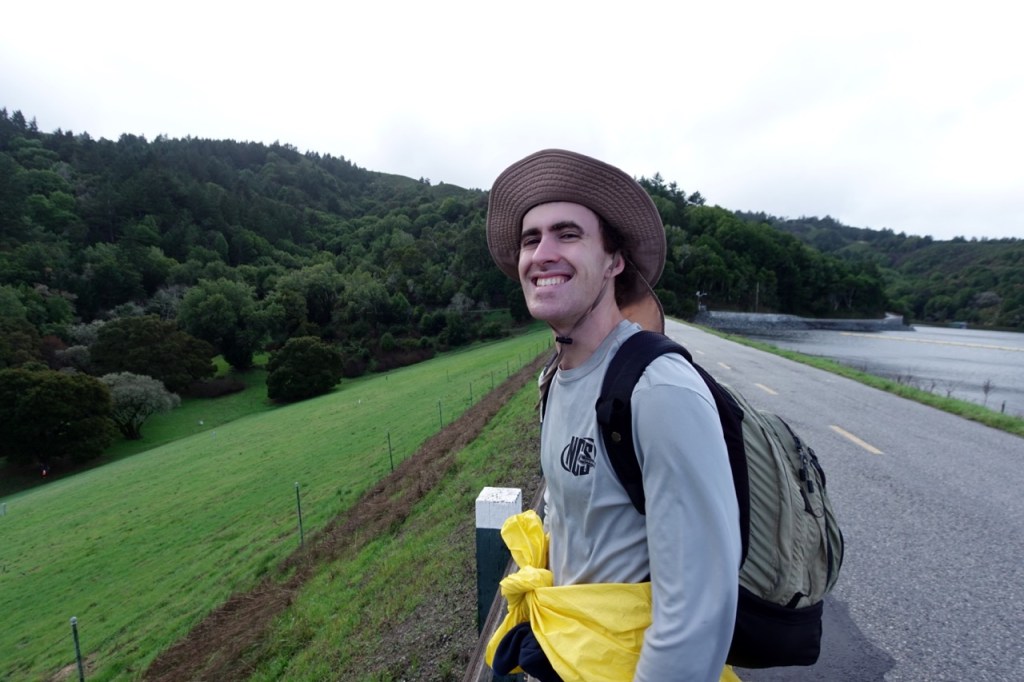
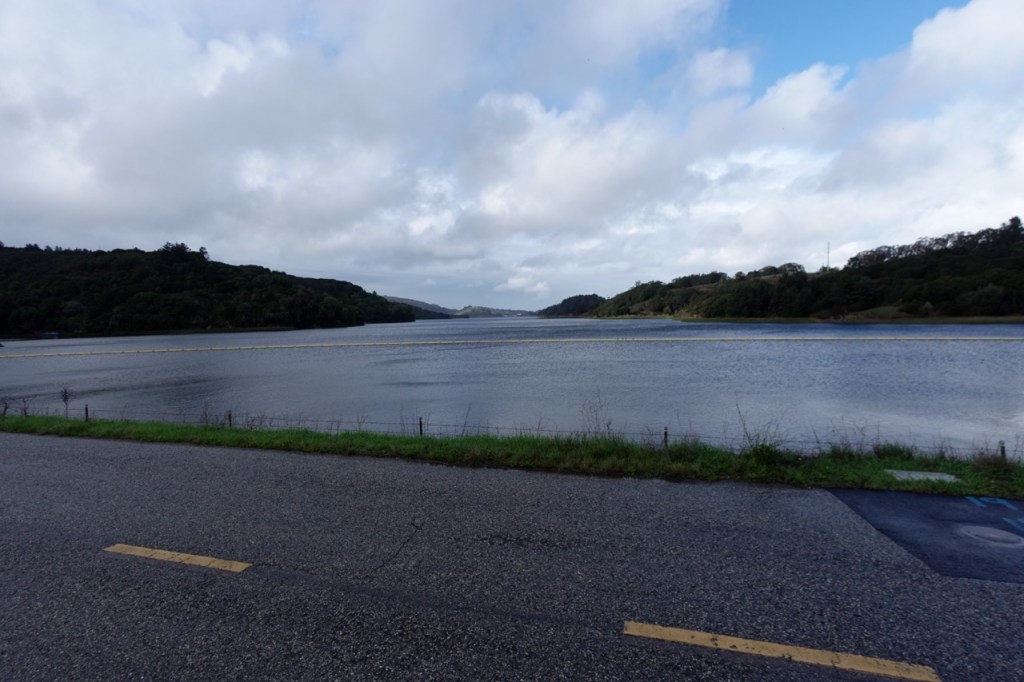
I took BART to Muni to the SF Zoo. I headed south, along the beach initially and then through neighborhoods. I met up with my friend Jack, and we headed south towards the SFPUC watershed lands. The actual ridge trail is almost impossible to get permits for, so we took an alternate along bike paths. The rain seemed to keep most of the bikers away, and we had a peaceful afternoon despite our pr0ximity to freeways and neighborhoods.

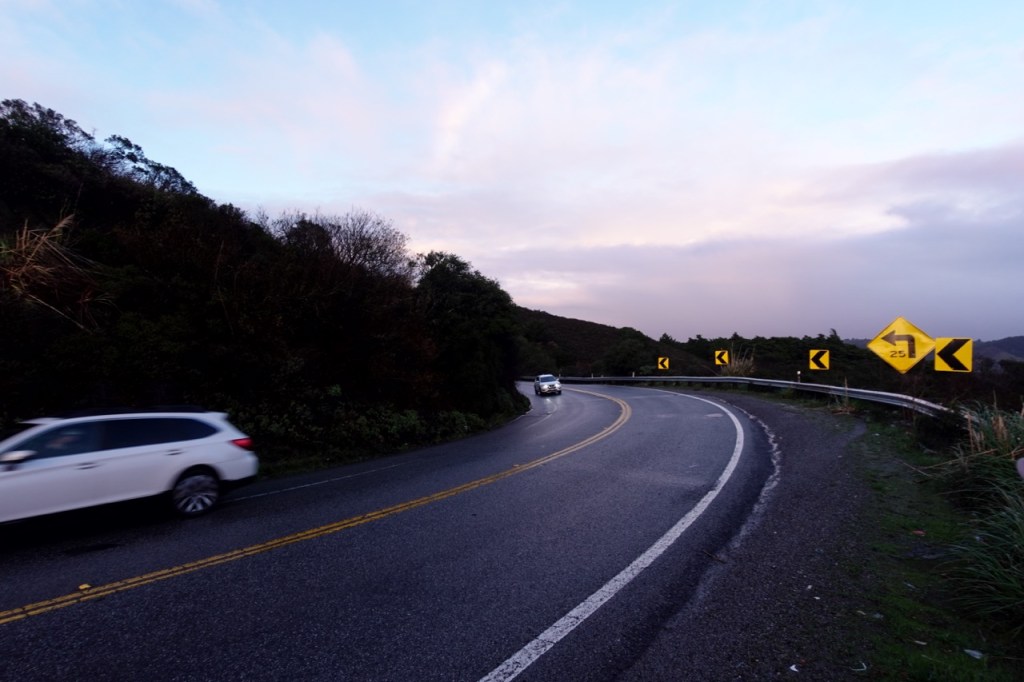
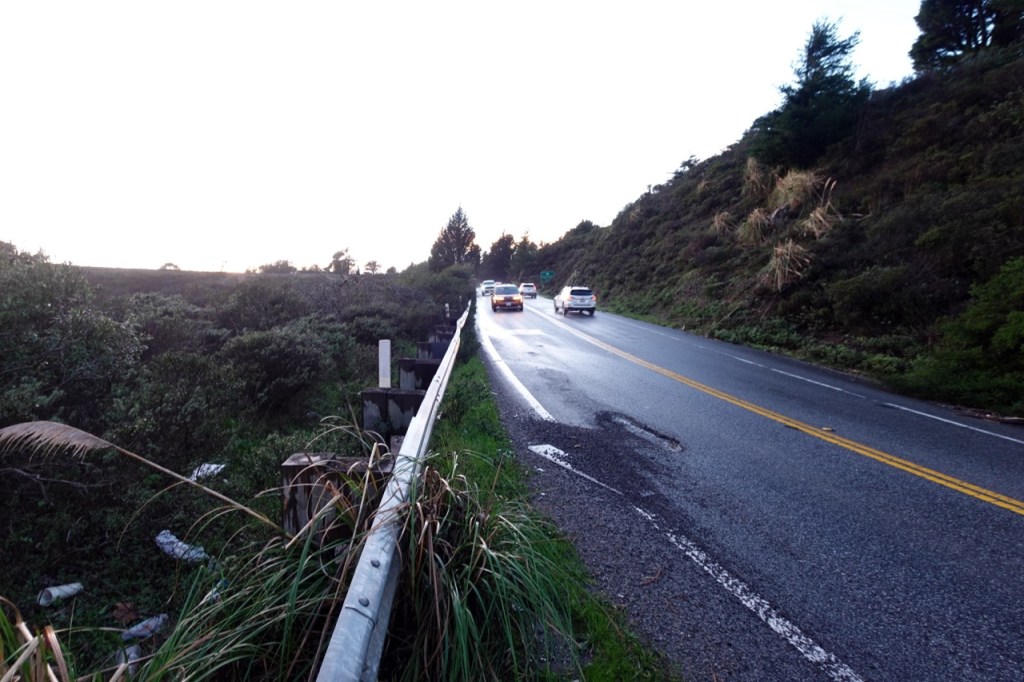
The race was on to get past the roadwalk before dark. Highway 92 with its narrow shoulders was unpleasant. Luckily after two hair raising miles, we arrived to Highway 35, which was much more peaceful. We continued on a few more miles before setting up camp. Directly east of the highway lay a brand new trail. 16 million for a few miles of over engineered trail. The trail looked complete, but we did not dare set foot on the heavily guarded SFPUC land.

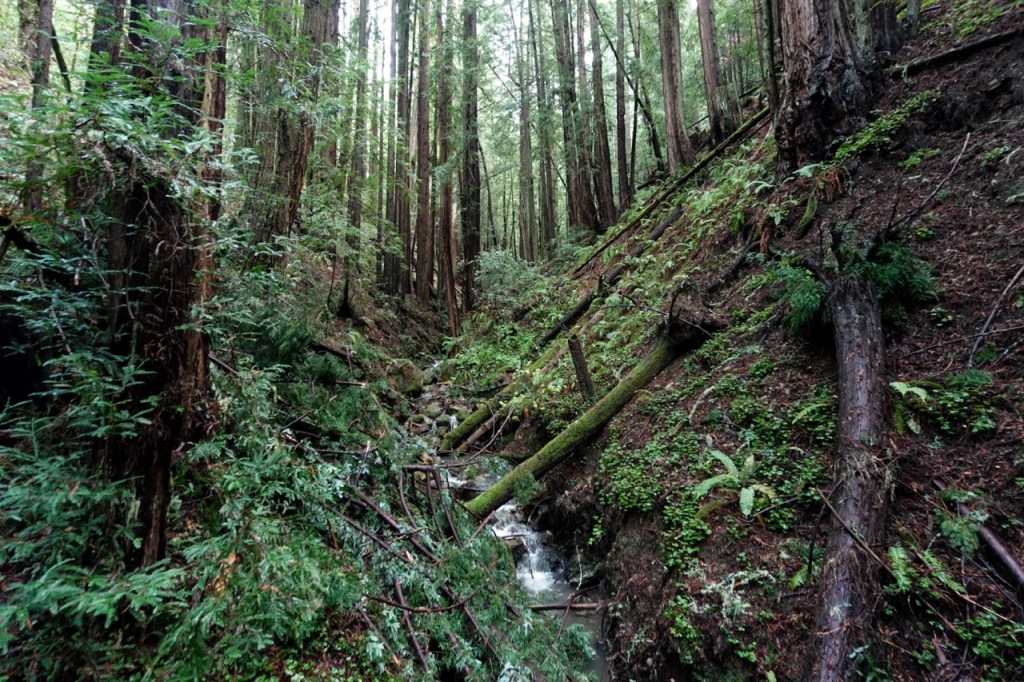
After a long winter night, we set off again in the morning. Somehow, despite days of rain we had run out of water the night prior. Luckily, early the next morning, we found a creek. We sat by the creek for an hour, a luxurious indulgence on a daylight starved December day. Soon after we realized that we would have no more time for breaks all day.

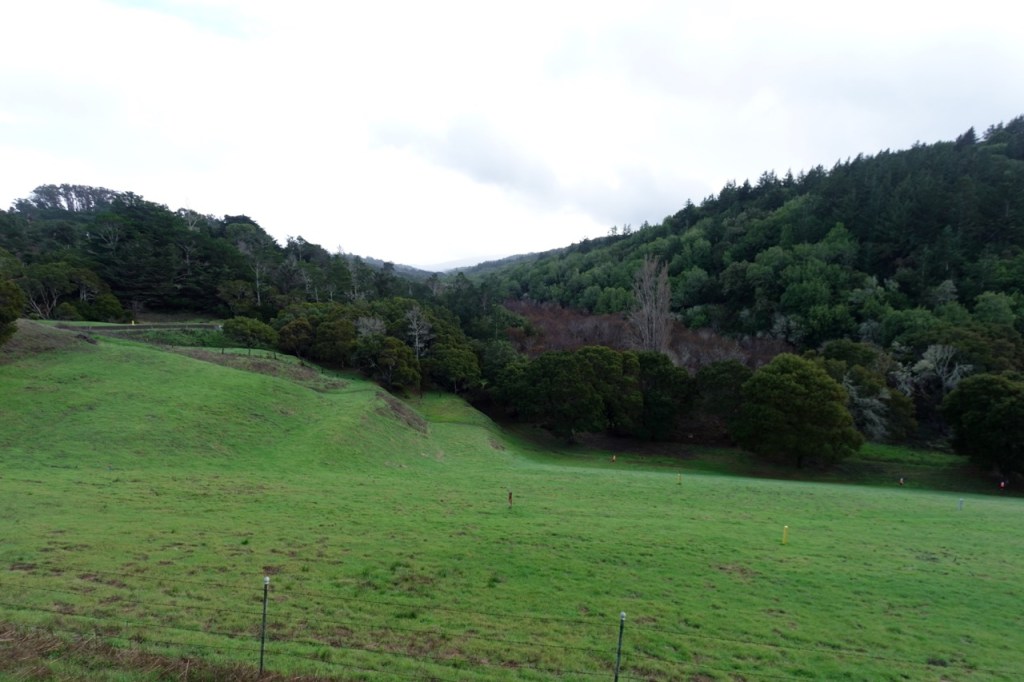
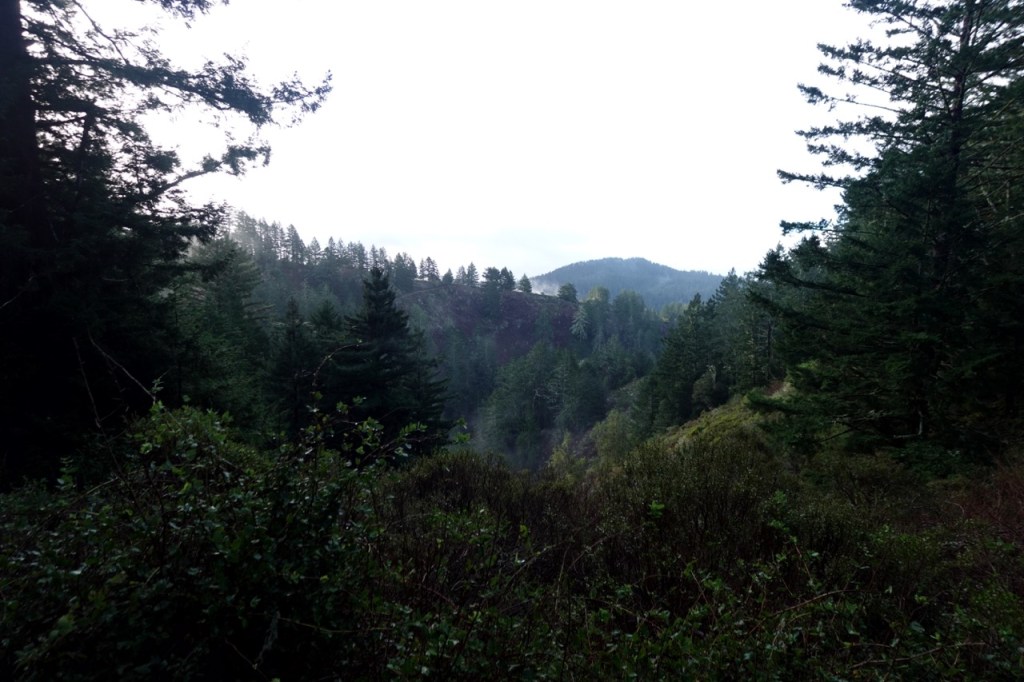
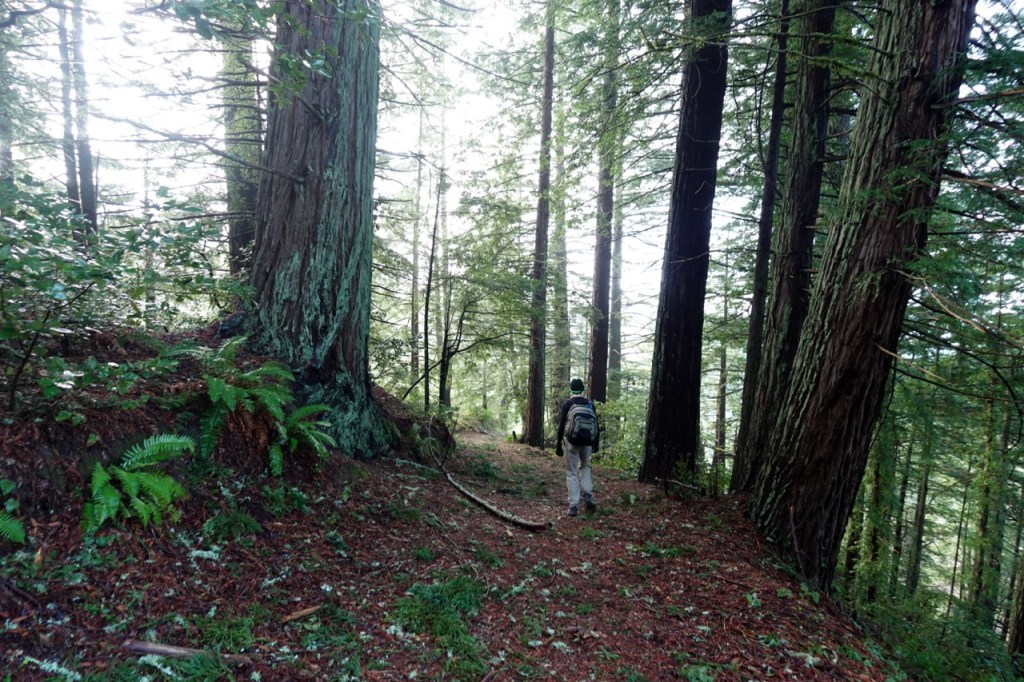
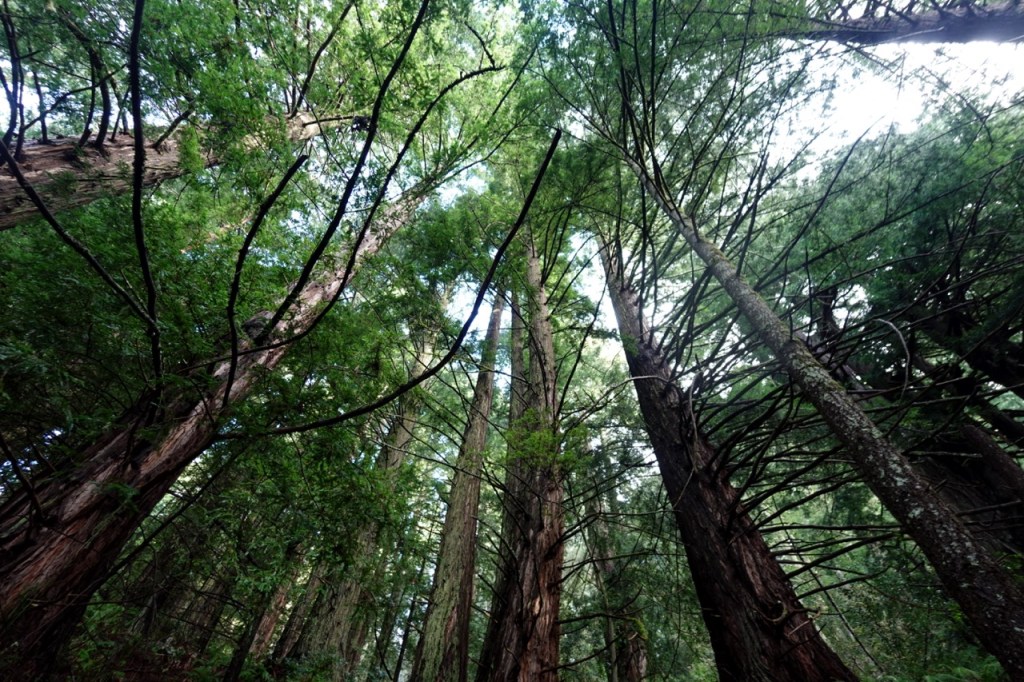
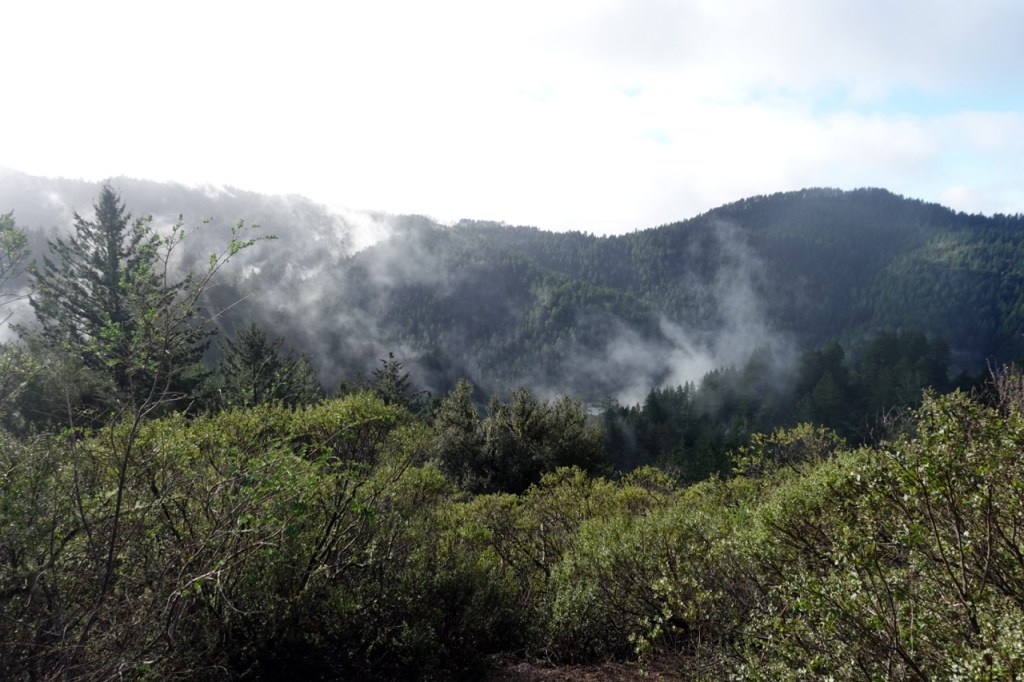
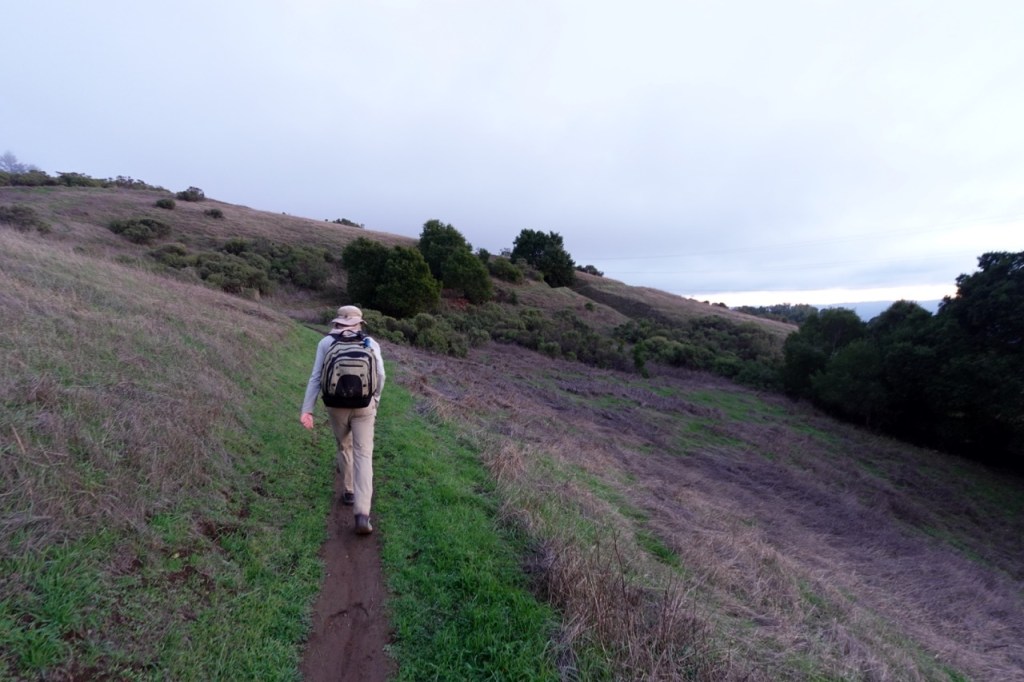
We climbed out of the beautiful redwood choked Purisima Creek, and continued south on the Skyline trail. The day went on, alternating sides of Hwy 35, with the occasional road walk mixed in. Compared to yesterday, it felt remote and pristine. Soon we were in Sky Londa, and soon after hiking with Jack’s friend Sophie who graciously agreed to take us back to BART.

The last light arrived just as we were finishing our hike. We connected our footsteps with our hike three years prior. Clouds rolled in, and we both agreed we were grateful to not be spending another long night out here. We roared back down the hill towards the millions of light below, back towards artificial day and legal places to sleep.

The Bay Area Ridge Trail never fails to provide an adventure. Lack of Sierra-like solitude is more than made up for by constant change. A beach walk, a road walk, a short legally dubious section, a reservoir, water district land. The trail always keeps me on my toes. Jack and I have both spent both of our lives in the Bay, but we both agree we were blown away by some of the places we got to see. As I near the end of my ten year section hike of this trail, I can’t help but wish I had a little of the trail left to savor.

Categories
Uncategorized

Berkeley to Vallejo

12/30/25

I took BART to Downtown Berkeley, and another bus into the fog and up to Tilden. From there I walked north, connecting the familiar Tilden, with unknown territory in Northern Contra Costa County. The trail weaves through a patchwork of EBRPD, EBMUD, a few short road walks and questionably legal sections.

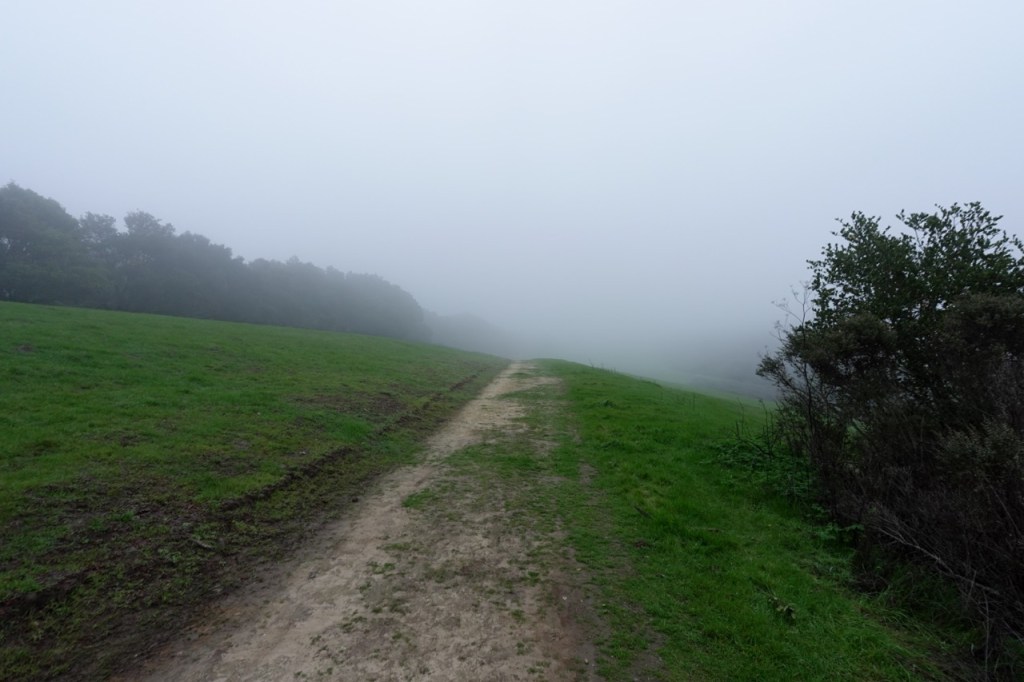
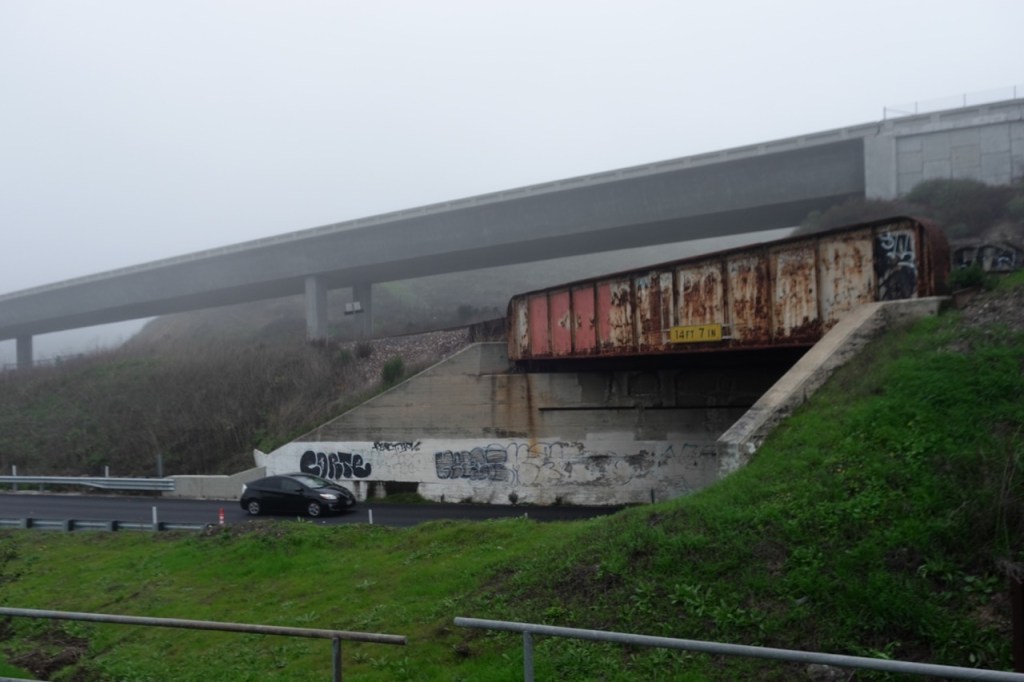
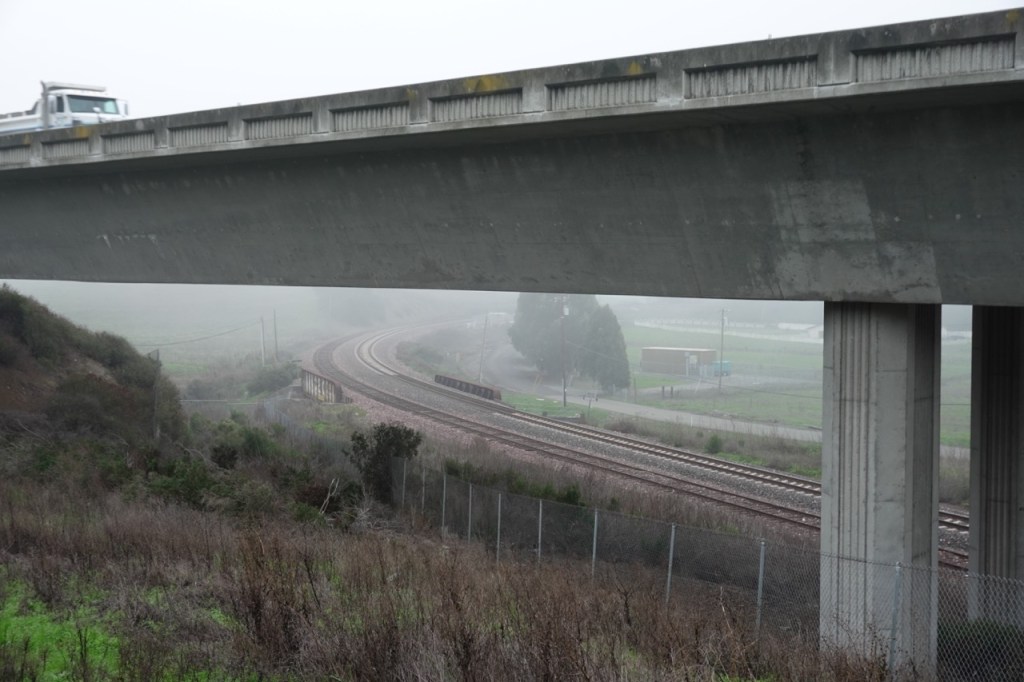
The fog didn’t let up all day. Luckily, I had great views of the Carquinez Bridge. Many cars whizzed by, but I had the sidewalk to myself. I crossed triumphantly, finishing the lower 5 Bay Area Counties on the Ridge Trail.

I walked the final few miles to the Vallejo Transit Center and soon I was being whisked back over the bridge by an express bus to El Cerrito del Norte BART.

Categories
Uncategorized

Santa Cruz Trek

The mountains of Northern Peru were one of the reasons I wanted to travel to South America. After 24 hours or so on the bus from Ecuador, I arrived in Caraz, Peru. It was a beautiful bus ride up El Canon del Pato. I planned to stay for a few nights to rest and acclimate, but I decided to head out to the mountains after just one night.

I found a collectivo after asking around quite a bit, and soon I was heading off into the mountains on my own. It was late December and Peru was in the midst of its rainy season. Most travelers visit Peru from May to September during the dry season, but I was here and figured I’d at least give hiking a try. I had recently finished the AT, so I was prepared for heavy rain. The trek was supposed to take 3-4 days, but I suspected I could finish a bit more quickly.

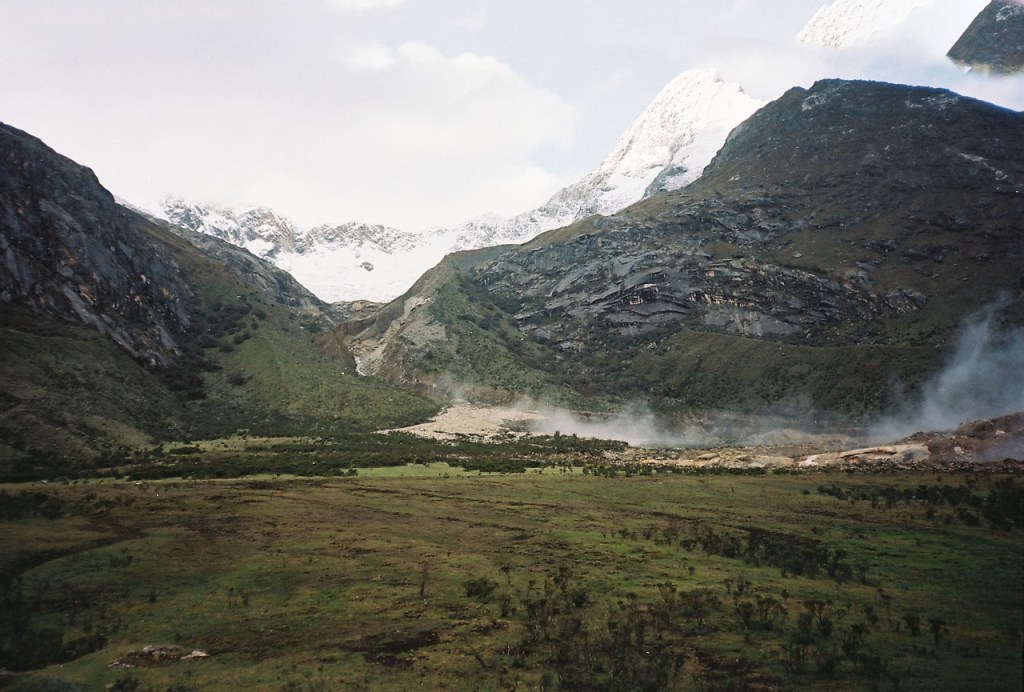
It felt great to be hiking again after a few months on buses and boats. The fresh but thin air filled my lungs and the big mountains beckoned. As I got higher in the mountains, it began to rain harder and harder. This would become a pattern in Peru — clearish mornings and then downpours every afternoon. Luckily, a dog joined me as I hiked through the rain. I setup camp around 14,000 feet, definitely feeling the altitude, but still feeling strong.

The next morning the clouds had mostly cleared and it looked like I’d have a weather window to go up and over the pass. My canine friend continued on with me. I slowed down as I neared the top as I struggled in the thin air.

As I neared the top, the clouds began to move in more and more. A mile or two down the other side it started to rain. Nonetheless, the scenery was beautiful, and I was thoroughly enjoying myself. As I descended, the rain picked up. Two more dogs joined me, so there was a group of four of us now. Before I knew it, I was nearing the end of the hike. It was not until 1 mile from the east end of the hike that I saw another group of hikers. I felt very lucky to have had this beautiful paradise all to myself.

Suddenly the “3-4 day” hike was over in just about 24 hours at a casual pace. I met a farmer who offered that I could sleep in a tent in his yard for 15 soles (about 4usd). This seemed a more than fair price to pay for a dry night of sleep. He also let me boil some water for dinner and we ate and talked in spanish together in his kitchen. He told me the only combi back over the mountains would be at 3am in the morning. I told him I would probably pass, but he strongly recommended I take the combi.

Sure enough, at 3am a combi came by and honked. I packed all of my things up in under a minute, and got in the combi. I spoke in spanish with two elementary aged peruvian girls as we crossed over a massive mountain pass in the pitch darkness. As first light arrived, we were in Yungay, and soon I took another combi back to Huaraz.

Overall the trip was a success. The rainy conditions were less than ideal, but the trek showed me that hiking was still possible at this time of year, and that the tradeoff for wet feet was solitude. I planned to rest for a few days in Huaraz and head off into the Huayhuash.

Categories
Uncategorized

On Technology in Schools and Elsewhere

Much has been written about the negative impacts of technology on education, but seeing the effects up close while substitute teaching this year has nonetheless been shocking. From chromebooks in the first grade, kids scrolling for whole class periods in the high schools, the negative effects of screens have been visible across all three districts and eight schools that I have subbed at. Last summer, I did a bit of a deep dive on this issue and read a lot of books on the subject: The Anxious Generation, Stolen Focus, Digital Minimalism, iGen, Dopamine Nation, and (semi-related) Free Range Kids. Nonetheless, these books failed to prepare me for the grim reality that is the complete and total grip technology has on childhood. Leadership is needed on this issue across all levels of government, as well as from school administrators, community leaders, teachers and parents.

Across the United States, more and more states have been implementing phone bans in schools. Phone bans are a great place to start, however, more needs to be done to protect students from the negative forces of the internet. Even if districts have phone bans in place, without strict enforcement, phones can seep back into the schools. At the elementary and middle schools that I have subbed at, phones have not been the problem, as phone bans are strictly enforced. However, the replacement of worksheets with Chromebooks and the litany of new e-education software ensures that distractions such as Youtube or online games are only a click away. These programs put the student’s learning in a very tenuous position, as learning must compete with the call of other distractions. Even techno-optimists must admit that clicking through questions on a screen is no replacement for in-person teaching or pen and paper problem solving. The billions of dollars spent nationwide on educational software could surely be better spent on hiring more teachers and classroom aides. Many e-learning programs intersperse questions with video entertainment  in order to mimic the addictive nature of online games. This substitution resigns ourselves to marginal learning outcomes at best. 

Gamifying education is the inevitable response to the challenge of educating a generation that has grown up online. Of course, much of the erosion of attention and programming for addiction occurs outside of school. The small percentage of time a child spends in school can only partially slow our society’s broader flow towards complete digital addiction. The problem starts from a young age, forty percent of children have their own tablet by age two.1 On the day before spring break, a fourth grader told me about her plans: stay up until 5am every day on her phone. Third graders talk frequently of streamers they are watching after school. Many of these streamers consume video games for 10-15 hours a day, and livestream their addictions to a mostly adolescent demographic. Even if a student is lucky to have good role models in the school and home, it is highly likely they are consuming content on Twitch, Tik Tok or elsewhere that models total addiction and degeneracy. Amidst all of these dark forces competing for a child’s attention, it is difficult to grow, play and make friends, let alone learn.

Watching high schoolers silently scroll on their phones for entire class periods is a truly depressing experience. This is the inevitable result of a childhood consisting of tens of thousands of hours on screens. Instead of having fun themselves, images flicker by for seconds as the scroller parasocially observes strangers having fun. The experience of scrolling on a smartphone, so clearly delineates the individual from the rest of the world.  With the absence of real life experiences, the scroller becomes easy to radicalize with video clips and sound bites. Xenophobia, sexism and misinformation thrive in the increasingly atomized and fragmented world of the internet. It is no wonder that my generation, “gen Z” has become one of the most politically conservative2 and individualistic3 generations in decades. Hanging out with friends, in-person gatherings, volunteering and many other activities have all declined substantially.5 When engaging in all of these offline activities, the individual feels a part of something bigger than themselves. The lines between the individual and the world begin to blur. Scrolling on one’s phone does the exact opposite: the rest of the world melds into a black hole in the palm of one’s hand. 

A digital childhood primes graduates to be consumers of many other insidious vices: online gambling, video game addiction and pornography. Among men ages 15-24 who play video games, the average person did so for 27 hours a week.6 Artificial intelligence will no doubt unleash far worse pathologies. iGen and the Anxious Generation mostly focused on the adverse effects of social media on children, but it is clear that older generations have been deeply affected as well. The average US-American adult now spends over five hours daily on their phones.7 Gen Z spends 6 hours and 27 minutes on average, but boomers still spend a shocking 4 hours and 19 minutes daily. 8 Scrolling has become the default substitute for rest. Viewing many disparate videos per minute is not restful for our brains, but quite the opposite. Three hammers, the automobile, the television and now the smartphone have weakened the social fabric in the United States. AMLO, the former president of Mexico observed, “there is a lot of individualism, there is a lack of love, of brotherhood, of hugs and embraces”. The right has incorrectly blamed this crisis on immigrants, women, LGBTQ people and “woke” ideology. The left has yet to offer an explanation at all.

The left must see the existential threat that technology poses to progressivism as well as society as a whole. The solution is not to go low and compete with the rightwing manosphere on TikTok, but to go high and take a moral stance against widespread digital degeneracy. This can be accomplished by legislating against technology in schools, banning online gambling and by promoting community and other in-person events. People of all ages should plan to attend more in-person events and seize back community from the throes of digital addiction. Cooperative living, potlucks, common interest groups and other in-person social networks are all examples of positive steps. On a personal level, switching to a dumbphone, reading more books, and writing more are all good steps to take. I am heartened that throughout both my travels around the country and across conversations with friends, people seem to realize this is a pressing issue. There is broad support for action, and any political leader that meets the moment with solutions and moral leadership will surely enjoy widespread support. We must not be afraid to radically change course, anything less will fail to match the enormity of the challenge we face.

Footnotes:

  1.  Common Sense Census: Media Use by Kids Zero to Eight
  2.  2024 Retrospective, Blue Rose Research
  3.  iGen, Jean Twenge
  4.  iGen, Jean Twenge
  5. US Bureau of Labor Statistics
  6. Harmony Healthcare IT Survey
  7. Harmony Healthcare IT Survey
  8. CBS News
Categories
Uncategorized

DIY Ultralight Backpack

After successfully making a quilt that survived the CDT, I figured I’d try my hand at making a backpack. I consulted my friends John and Dan and they made some recommendations about materials.

Materials

1 yd 5oz/ sqyd DCF

1/2 yd ROBIC 210D EXTREEMA

1/4 yd 3d mesh (for straps)

yoga matt (for foam straps)

Some old Butterfly Yoga Pants

misc buckles and webbing from old pack

Rough Steps

  1. Buy materials
  2. Measure old pack
  3. Cut out materials
  4. Sew sides of pack
  5. Sew it all together

For this project, I mostly used my old MLD Exodus 58l as a template, but I also made a few changes. Since I do not own a sewing machine and I live in a 24 sqft van, I completed this project at the library, the laundromat and at friend’s houses. Thanks to everyone that let me borrow your machine!

On my first day at the library I wrote all of my measurements down from my old pack on a piece of paper, and began to cut the DCF.
my measurements (black does not include seam allowance, green does, gold is proposed changes for next time)
On my second day at the library, the pieces and pockets began to take shape
On my third day at the library, I started working on the shoulder straps. Sometimes progress was slow, as I could only work for a two hours between work and when the library closed for the night.
A major breakthrough occured when my friend Bridget let me use her sewing machine!
My friend Sienna let me use her sewing machine at the Laundromat, and I was able to finish the straps!
Another major breakthrough after my friend Sienna invited me to her friend Izzy’s sewing party
My friend Sienna let me borrow her machine, and I was able to finish the pack!

Overall, this was a very fun project! I learned a lot, and the finished product turned out better than expected. In total I used about 8 different machines. If I was to make the pack again, I would try to borrow a friend’s machine for a day or two to save time. Switching machines was a fun challenge, but did add stress at times.

A few other changes I would make:

  1. Wider shoulder straps so that I could fit a bigger phone in the pocket
  2. Wider pockets
  3. Hip Belt Pockets
  4. Putting the ski straps lower and the ice axe top loops higher
  5. Sewing the front and back together first before sewing the bottom on.